

Long before glittering skylines rose out of the Nevada desert or glowing smartphone displays illuminated bedroom nightstands, humans were finding inventive ways to challenge fate. Archaeologists excavating prehistoric sites in Mesopotamia unearthed polished sheep knucklebones, known as astragali, smoothed down by hands that rolled them across dirt floors thousands of years before the invention of currency. In ancient China, wooden tiles established the earliest recorded ancestors of lottery and card games, while Roman citizens packed the Colosseum and Circus Maximus, passionately trading coin over chariot turns and gladiatorial contests.
The human appetite for risk, prediction, and reward is not an artifact of modern commercialism. It is a primal instinct woven directly into our evolutionary past. Yet, the environment in which that instinct plays out has undergone a radical transformation. Within a single generation, an enterprise once anchored to smoky backrooms, physical chips, and marble-clad resort palaces has migrated onto high-speed digital networks. By examining how gambling’s ancient foundations intersect with cutting-edge technology, we can see that our modern wagering culture is not a break from history, but its most sophisticated continuation.
The Primordial Roots of Wager and Chance
To understand modern gaming, one must first recognize that early humans rarely viewed chance as random. In antiquity, the casting of lots was deeply entangled with divination and religion. Rolling bones, drawing marked sticks, or reading the fall of arrows were practical methods used to interpret the will of the gods. When Zeus, Poseidon, and Hades sought to divide the heavens, the sea, and the underworld in Greek mythology, they cast lots to settle the cosmic order.
Over centuries, that sacred quest for divine guidance gradually detached from spiritual ceremony and transformed into secular entertainment. Ancient Rome developed such an insatiable appetite for dice that emperors enacted bans outside the seasonal holiday of Saturnalia, forcing underground clubs to flourish in tavern basements. In Renaissance Europe, street lotteries financed municipal bridges and defensive walls, proving that the collective human willingness to stake a modest sum on an improbable windfall could bankroll entire empires. Risk was a fundamental social adhesive long before it became a commercial industry.
From Illicit Parlors to Architectural Temples
As societies urbanized, the spaces built to host gambling evolved from ad-hoc tavern corners into grand architectural monuments designed to curate an all-encompassing emotional experience.
The birth of the formal casino dates back to Venice in 1638, with the opening of the Ridotto. Established by civic authorities to bring order and oversight to the rowdy carnival season, it introduced structured rules, formal dress codes, and house-banked games. Two centuries later, Monaco leaned into opulence, transforming a quiet Mediterranean bluff into the gilded halls of Monte Carlo, cementing gaming as an elite, high-society pursuit.
By the mid-twentieth century, the American landscape perfected the physical casino environment. Las Vegas traded old-world European aristocracy for neon spectacle and behavioral engineering. Casino resorts were mapped as deliberate labyrinths: no clocks on the walls, no windows to mark the passage of daylight, and plush carpets dampening the sound of footsteps while coins clattered into metal hoppers. Every physical element, from ambient lighting to the rhythm of free drinks and soothing air temperatures, was tailored to prolong engagement. For decades, this physical architecture reigned supreme.
The Digital Migration: Rebuilding Probability on Silicon
The advent of the internet dissolved physical walls and fundamentally altered the relationship between player and game. The transition was not simply about porting physical mechanics to a computer screen; it required reimagining the concept of trust, fairness, and human interaction.
The Invisible Hand of Computational Chance
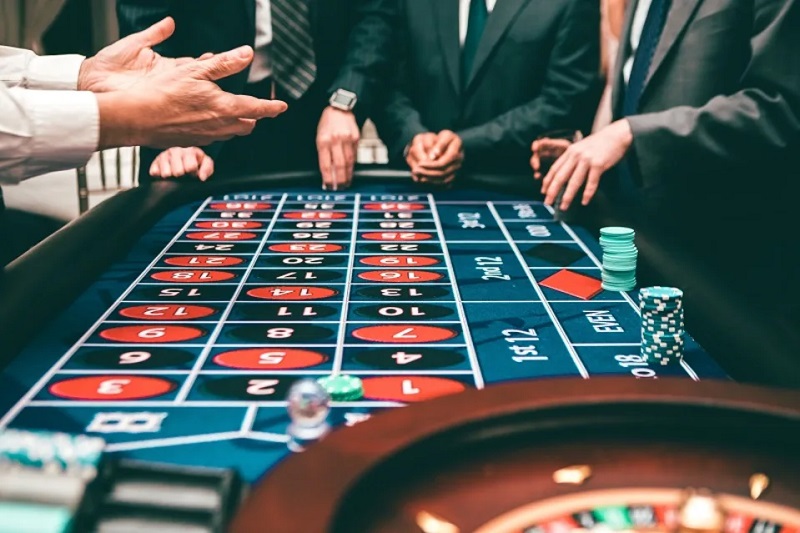
In a physical venue, trust relies on tangible reality: the audible click of a roulette ball falling into a brass pocket, the crisp friction of freshly shuffled paper decks, or the visible spin of mechanical reels. Transitioning those games to digital code meant replacing mechanical chaos with mathematics.
Modern digital gaming is anchored by pseudo-random number generators, sophisticated mathematical algorithms that produce millions of numerical sequences every second. These engines ensure that the exact microsecond a player presses a button determines the spin, card deal, or roll, perfectly emulating the unpredictability of a physical wheel. Independent testing laboratories audit these systems against billions of simulations to guarantee statistical fairness, shifting player confidence from physical observation to cryptographic transparency.
Re-Humanizing the Screen with Live-Stream Studios
While algorithmic software offered convenience, early digital interfaces often felt solitary and clinical. Gamers missed the tactile theatrics of a genuine gaming floor: the shuffle of cards, the banter of the pit, and the visual reassurance of a real croupier.
The solution came through high-definition live streaming. Across specialized studios spanning North America and Europe, real human dealers manage physical tables in front of optical character recognition cameras. These optical readers instantly decode physical playing cards and roulette outcomes, translating the physical results into digital data feeds within milliseconds. A player sitting on a couch thousands of miles away can place a digital wager while watching a human dealer slide genuine cards across green felt, effectively marrying the romance of Monte Carlo with the convenience of a modern web application.
The Unbroken Thread of Player Psychology
Despite the dizzying leap from carved sheep bones to streaming video feeds, the psychological mechanism powering the experience has remained astonishingly consistent across millennia.
Neuroscience shows that the brain does not release dopamine solely when a person wins; the surge peaks during the period of anticipation and uncertainty. That sudden spike in heart rate as a Roman citizen watched ivory dice tumble into a wooden bowl is functionally identical to the adrenaline felt by a contemporary user watching a digital wheel slow down on an OLED display.
Digital platforms have refined the delivery mechanism, eliminating pauses between rounds, offering micro-wagers on specific sports plays, and matching gameplay to individual preferences. Yet the fundamental human desire—to step outside the predictability of ordinary life, court vulnerability, and await the judgment of chance—is precisely what our ancestors chased around council fires and candlelit tables.
Navigating the Modern Responsibility Paradox
The greatest divergence between ancient wagering and the digital frontier lies in access and scale. In previous centuries, natural physical frictions acted as built-in safeguards. To gamble, one had to travel to a dedicated hall, possess physical cash, and navigate social environments where public behavior was observed and checked by peers.
The modern smartphone dismantled those practical guardrails, placing an around-the-clock casino inside every pocket. This unprecedented accessibility has forced the global industry to construct sophisticated digital safeguards. Where ancient rulers relied on outright bans that drove play underground, today’s landscape relies on predictive modeling, biometric authentication, and algorithmic pattern recognition. Automated systems can now detect erratic bet sizing, identify chasing behavior, and intervene with mandatory cool-off periods before recreational play turns harmful. In the digital age, operational survival hinges on preserving user safety just as much as delivering entertainment.
An Enduring Human Story
Gambling has always reflected the technological state of the world that surrounds it. When humanity worked with stone and bone, it carved dice; when it invented the printing press, it popularized card decks; when industrial machinery arose, it produced the mechanical slot; and when telecommunications took over, it built an interconnected global network.
The screens, chips, and code are modern marvels, but they are ultimately just the latest packaging for an ancient human story. As augmented reality, artificial intelligence, and decentralized ledgers begin to map out the next iteration of the craft, the core appeal will remain untouched. At its heart, the world of gaming will always belong to a timeless ritual: a person, an uncertain outcome, and the eternal thrill of seeing where the pieces land.

Comments are closed.