

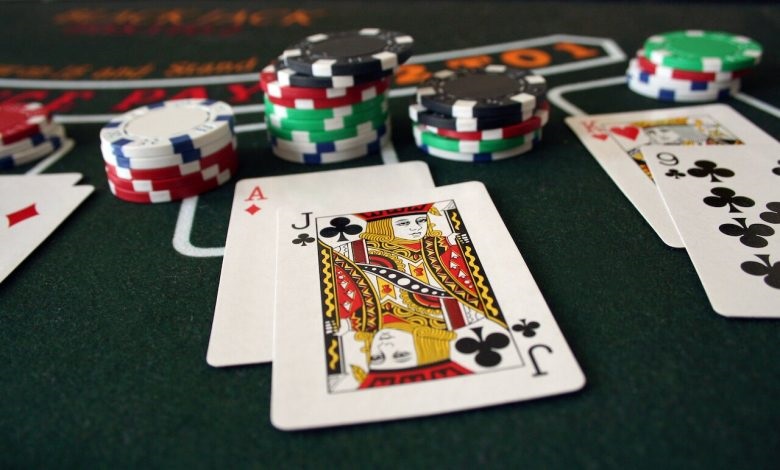
Pop culture loves to depict poker as a battle of psychic warfare, where steely-eyed gamblers read physical twitches, detect micro-expressions across smoke-filled rooms, and push massive chip stacks into the middle on sheer bravado. It makes for compelling cinema, but it represents terrible advice for anyone stepping up to a table for the first time.
In reality, successful poker is not built on mystical intuition or theatrical showdowns. It is an exercise in probability, behavioral discipline, and decision-making under conditions of incomplete information. The players who consistently turn a profit do not rely on lightning strikes of luck; they execute small, repeatable strategic edges over hundreds of hours. If you want to sit down at a cash game or enter a tournament without donating your bankroll to seasoned regulars, there are several foundational competencies you must cultivate long before you see your first flop.
Mastering the Power of Table Position
If you ask professional players to identify the single most overlooked concept among beginners, the unanimous answer is almost always table position. Position refers to where you sit relative to the dealer button, which dictates the order of action for every betting round after the initial deal.
In Texas Hold’em and Omaha, the players who act last possess an enormous, structural information advantage. When you sit in late position—specifically on the dealer button or the cutoff seat directly to its right—you get to watch how every other player handles their cards before you have to risk a single chip. You see who checked with hesitation, who bet with conviction, and who folded under pressure.
Acting early, such as playing from the small blind or immediately to the left of the big blind, forces you to operate in the dark. Novices frequently bleed chips because they play identical hands from early and late positions. Developing positional awareness means understanding that a hand like King-Jack offsuit might be an easy fold from early position, yet a prime candidate for an aggressive raise when you hold the button. By reserving the bulk of your active participation for situations where you act last, you dramatically simplify your post-flop decisions and protect your chip stack.
Pre-Flop Hand Selection and Aggression
The most seductive trap for novice poker players is boredom. A standard live table deals roughly twenty-five to thirty hands per hour, and folding hand after hand can feel agonizingly dull. This restlessness leads inexperienced players to justify entering pots with mediocre cards, convincing themselves that any two holdings can catch a fortunate flop.
Overcoming this instinct requires strict pre-flop discipline. Before ever buying into a game, you must internalize basic starting-hand ranges. This means understanding the hierarchy between premium holdings, speculative hands, and outright junk:
-
Premium pairs such as Aces, Kings, and Queens, alongside Ace-King, which carry intrinsic value across nearly all board textures
-
Speculative holdings like middle pocket pairs and suited connectors, which require favorable implied odds to justify seeing a flop
-
Unplayable trap cards, particularly weak offsuit Aces or unsuited face cards, which frequently make second-best hands that prove extraordinarily expensive to fold
Coupled with hand selection is the adoption of a tight-aggressive (TAG) framework. Beginners often fall into the habit of “limping,” which means simply matching the big blind to see a cheap flop. Limping broadcasts weakness, invites other players to enter the pot behind you, and surrenders initiative. When you choose to enter a pot, do so with a deliberate raise. Aggression narrows the field, defines your opponents’ holdings, and gives you two distinct routes to winning: either by showing down the best hand or by forcing your opponents to surrender before the showdown.
Practical Math: Pot Odds and Outs
The mathematical foundation of poker often intimidates newcomers who assume they need an advanced degree in statistics to calculate correct plays. In practice, the arithmetic required at the table is straightforward, practical, and easy to run in your head within seconds.
The core concept centers on comparing pot odds against hand equity. Your “outs” are the unseen cards remaining in the deck that will improve your holding to a probable winner. If you hold four cards to a flush after the flop, nine cards of your suit remain in the deck, giving you nine outs.
Using the universal “Rule of Four and Two,” you can convert those outs into a reliable percentage:
-
On the flop, multiply your outs by four to estimate your chances of hitting by the river (nine outs multiplied by four equals roughly thirty-six percent).
-
On the turn, multiply your remaining outs by two to calculate your odds of hitting on the final card (nine outs multiplied by two equals roughly eighteen percent).
Once you know your probability of completing the hand, you compare that percentage to the price the pot offers you. If an opponent bets ten dollars into a pot of thirty dollars, the total pot becomes forty dollars, and it costs you ten dollars to call. You are risking ten dollars to win fifty total dollars, which translates to pot odds of five-to-one, or twenty percent. Because your flush draw has an approximate thirty-six percent chance of hitting from the flop, making the call is mathematically profitable over the long run. Embracing this basic calculation removes emotional guesswork and anchors your choices in pure statistical value.
Emotional Governance and Navigating Variance
Poker is distinct from almost every other competitive endeavor because you can make the absolute correct decision and still lose all your chips on a single card. This mathematical reality is known as variance, and how you respond to it will dictate whether you survive as a player.
When a weaker opponent makes an irrational play, hits a two-percent miracle card on the river, and scoops a massive pot, the natural human reaction is frustration. In poker, this breakdown of emotional discipline is called tilt. Tilt does not always look like an explosive tantrum at the felt; more often, it manifests subtly as impatient play, ill-advised bluffing, or calling bets out of a stubborn desire to win back lost money.
Developing emotional resilience requires divorcing your evaluation of a hand from its short-term outcome. A well-played hand that loses money to a lucky draw is still a success, because if that exact scenario plays out a thousand times, the mathematics will reward you. Mastering your emotional response means training your brain to find satisfaction in sound execution rather than temporary financial swings.
Bankroll Management as a Defensive Armor
You can master table position, calculate complex odds, and maintain iron emotional control, but without disciplined bankroll management, you are one bad evening away from going broke.
Your bankroll is your operational inventory; without it, you cannot play. Too many beginners treat their poker funds as casual pocket cash, buying into games where a single buy-in represents a dangerous percentage of their total entertainment budget. This creates a psychological handicap known as playing “scared money.” When you cannot afford to lose the chips in front of you, you cannot make the aggressive, optimal plays the game demands.
A safe baseline for cash games is maintaining a dedicated bankroll equal to at least twenty to thirty full buy-ins for the stakes you intend to play. If you play a standard $1/$2 no-limit hold’em game with a two-hundred-dollar buy-in, you should ideally possess a dedicated fund of four to six thousand dollars set aside strictly for poker. This buffer absorbs the natural losing streaks inherent to the game without placing pressure on your daily living expenses or forcing you to play with anxiety.
Cultivating the Habits of Success
Entering the world of poker without these core abilities is like attempting to navigate open water without a compass. The game is profoundly unforgiving to impatience, emotional fragility, and mathematical ignorance.
Before committing meaningful capital to the felt, take the time to build these habits away from the casino. Review hand histories, study pre-flop charts until starting selections become second nature, and practice counting outs during low-stakes online sessions or friendly home games. When you replace wild speculation with structured strategy, poker ceases to be a reckless gamble and becomes what it was always meant to be: an intellectual challenge where preparation, patience, and logic ultimately carry the day.

Comments are closed.