

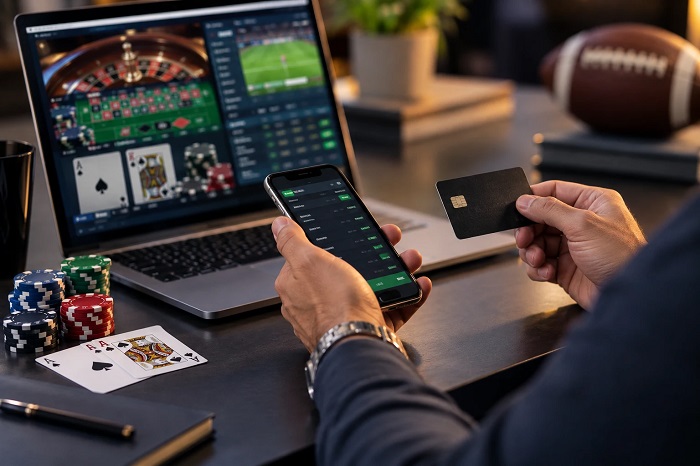
For decades, the physical casino floor was one of the few places in modern commerce where paper cash remained undisputed king. The entire sensory architecture of the gaming floor was built around currency in its most tangible forms: the satisfying snap of fresh bills hitting the green felt, the heavy rattle of tokens falling into metal trays, and the ubiquitous lines of patrons waiting at the cage or paying exorbitant ATM fees near the entrance. Handling physical money was not just a logistical necessity; it was an integral part of the ritual.
That ritual is undergoing its most profound transformation in half a century. As consumers embrace digital wallets, tap-to-pay terminals, and instant bank transfers in their daily routines, the gambling sector is racing to catch up with broader financial trends. Going cashless is no longer an experimental gimmick reserved for high-end VIP lounges. It has become a core operational priority, reshaping player behavior, supercharging transaction speeds, and fundamentally altering how gaming venues and online platforms manage risk, security, and customer loyalty.
The Growing Friction of Physical Currency
To understand why the gaming sector is pivoting toward cashless technology, one has to examine the enormous friction paper money creates. Managing physical cash is remarkably inefficient and expensive. Commercial properties spend millions annually on armored transport, climate-controlled counting rooms, complex surveillance protocols, and the labor required to manually verify and audit cash drawers across thousands of gaming terminals.
Beyond backend overhead, physical cash creates unwanted friction for the modern player. In an era where younger generations routinely leave their homes carrying nothing more than a smartphone, forcing guests to visit a bank branch or absorb punishing surcharge fees at an ATM before sitting down at a table creates an immediate barrier to entry. When players run out of physical bills, their momentum stops. They have to step away from the game, locate a cash source, and re-engage. For operators, that break in continuity represents lost engagement, while for players, it is an outdated inconvenience in an otherwise seamless digital world.
The Technologies Powering the Digital Shift
The modern cashless ecosystem is not a single tool, but an interconnected network of financial technologies designed to move money securely and effortlessly across devices and venues.
Digital Wallets and Touchless Tables
At the center of this evolution is the dedicated gaming digital wallet. Rather than carrying player cards, vouchers, and cash clips, patrons can now link their personal checking accounts, credit cards, or mobile payment services directly to a secure application on their phones.
Using Near Field Communication (NFC) or encrypted Bluetooth connections, a player can simply tap their phone against a slot machine or table console to transfer credits instantly. The traditional Ticket-In, Ticket-Out (TITO) system, which revolutionized slots twenty years ago by replacing coins with printed paper barcodes, is evolving into a completely paperless standard. Winnings flow directly back into the digital wallet, ready to be transferred back to a personal bank account or spent at on-site restaurants, hotels, and retail shops with a single tap.
Open Banking and Real-Time Settlements
In the online gaming space, the payment revolution centers on speed and settlement transparency. Traditional card deposits and withdrawals often suffered from high decline rates, cumbersome processing times, and multi-day waiting periods for payouts.
The rise of open banking and real-time payment rails has dismantled those delays. By allowing players to authorize direct account-to-account transfers through secure banking portals, funds clear in seconds rather than business days. When a player wins an online wager, they no longer have to wait seventy-two hours to see the proceeds in their checking balance. That immediate liquidity bridges the gap between the instant gratification of physical gaming and the convenience of home play, creating a level of trust that previous payment rails struggled to deliver.
Shifting Psychology and the Abstraction of Money
The migration away from paper currency inevitably alters how people perceive value and expenditure. Behavioral economists have long noted the phenomenon of payment decoupling, where parting with digital credits feels psychologically less painful than handing over physical paper banknotes. When someone pulls a five-hundred-dollar stack of bills from their wallet, the physical depletion of cash acts as an immediate visual brake. A digital balance, by contrast, feels abstract.
This shift presents a nuanced challenge for the industry. While streamlined payments enhance user convenience and eliminate awkward pauses in gameplay, they can also accelerate the velocity of wagering. Recognizing this dynamic, regulators and operators have realized that cashless infrastructure cannot simply replicate the speed of an e-commerce checkout; it must be built with deliberate guardrails.
Transforming Responsible Gaming from Guesswork to Precision
Paradoxically, the death of paper cash offers one of the most powerful advancements in player protection the industry has ever seen. With physical currency, tracking personal spending relies almost entirely on self-discipline or sporadic human observation. A patron could withdraw cash multiple times across different ATMs, buy in at several distinct tables, and lose track of their net position without any central mechanism noticing the escalation.
Cashless ecosystems replace that blind spot with total digital visibility. Because every transaction routes through a centralized profile, operators can provide players with sophisticated, personalized budgeting tools that were impossible under cash-only conditions:
-
Players can configure voluntary daily, weekly, or monthly deposit limits before they begin playing.
-
Automated push notifications can deliver real-time reality checks, outlining exact net spend and time elapsed during an active session.
-
Systems can enforce mandatory cool-off intervals when predetermined thresholds are crossed.
-
Predictive machine-learning algorithms can flag atypical deposit spikes or erratic reloading patterns, prompting automated interventions or wellness check-ins.
Rather than obscuring spending, a well-engineered cashless framework actually empowers players with better data, transforming responsible gaming from a reactive lecture into an active, transparent dashboard.
Elevated Security and Operational Integrity
Beyond player convenience and compliance tools, removing cash from circulation resolves persistent security vulnerabilities that have challenged casinos for centuries. Cash-heavy environments are prime targets for counterfeit currency operations, internal skimming, and opportunistic theft.
Transitioning to digital balances simplifies compliance with anti-money laundering (AML) and Know Your Customer (KYC) requirements. Because digital transactions are tied to verified bank accounts and authenticated personal identities, suspicious transaction patterns are much easier to detect and isolate in real time. The extensive paper trail that formerly required teams of auditors to assemble across stacks of physical receipts is replaced by an immutable, automated ledger.
The Path Toward a Fully Integrated Future
The transition to a completely cashless gaming environment will not happen overnight. Retrofitting thousands of physical slot cabinets and table games requires substantial capital investment, and many loyal patrons still hold a genuine fondness for the tactile tradition of handling chips and bills.
Nevertheless, the trajectory is unmistakable. As consumer expectations continue to tilt toward speed, security, and digital convenience, the gaming industry is discovering that modern financial technology is an asset rather than an intrusion. By removing the physical friction of money, modern payment methods are turning gaming into a cleaner, safer, and far more connected form of modern hospitality.

Comments are closed.